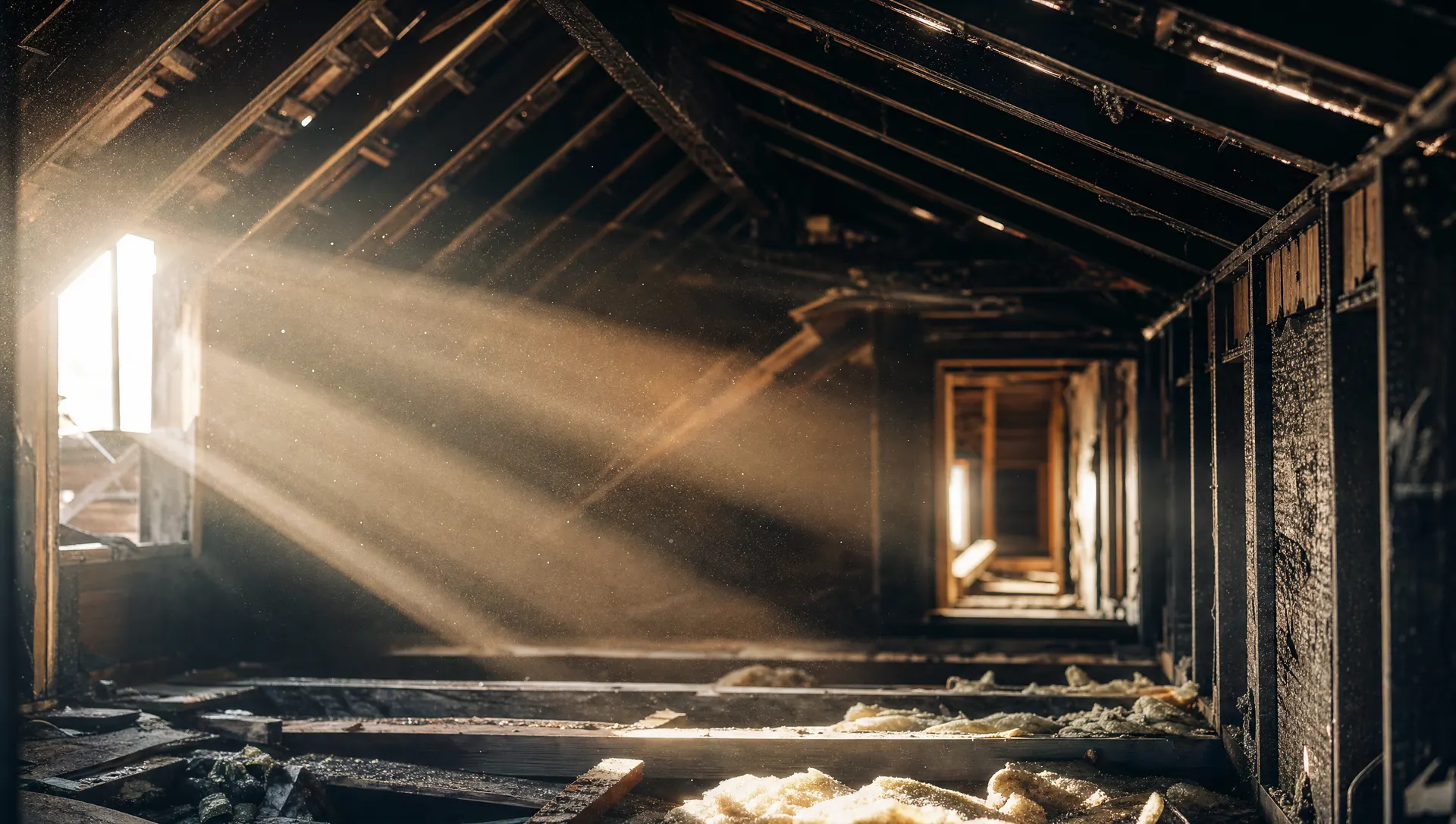
Water Damage from Firefighting in O'Fallon, MO
Firefighters put out fires with water, and a lot of it — often more water in an afternoon than a home's plumbing would move in a month. That water saves the structure, and then it becomes its own damage problem the moment the fire is out: soaked carpet and pad, standing water in a basement, ceilings heavy and sagging from what came through a floor above. O'Fallon Fire Damage handles water damage from firefighting across O'Fallon and St. Charles County — extraction, structural drying, and cleanup for the water left behind after the flames are gone. It is easy to focus entirely on the fire and overlook this part, but on plenty of jobs the water ends up affecting more square footage than the fire itself ever touched.
This is cleanup after the emergency, not during one. If the fire is still active, that call goes to 911 before anything else.
What Water Damage from Firefighting Looks Like
- Standing water on floors, especially basements and lower levels where water from upper floors ends up pooling
- Saturated carpet, carpet pad, and subfloor that needs to be extracted and dried or removed entirely
- Water-heavy, sagging ceilings and drywall on levels below where hoses were used
- Water damage to contents — furniture, boxes, electronics — that were nowhere near the fire itself but sat in the path of the water
- Hidden moisture inside wall cavities and under flooring that is not visible without moisture meters
- Combined soot-and-water contamination, since the water often carries soot and ash with it as it moves through the structure
- Elevated humidity throughout the structure, which slows drying everywhere else in the house if it is not addressed with proper dehumidification
Firefighting Water in O'Fallon's Newer Subdivision Homes
A lot of O'Fallon's housing stock includes finished basements — a common feature in the subdivisions built through the 1990s and 2000s — which puts a finished, carpeted, drywalled space directly in the path of any water used on the floors above. Water from firefighting a second-floor bedroom or an attic fire travels straight down through the house, and in a two-story floor plan with a finished basement, that basement is often where the water ends up pooling. Attached garages carry their own version of the problem: a garage fire that gets significant water applied to it can send that water into an unfinished but stored-full space, or under a shared wall into an adjacent finished room, before anyone realizes how far it traveled. Multi-level construction is the norm across most of these subdivisions, and every level below where firefighting water was used is a candidate for damage, even levels with no visible connection to the fire itself.
When to Call for Water Damage from Firefighting
Call as soon as the fire department releases the property — this work runs on the same clock as any other water damage, meaning hours matter, not days. Standing water and saturated materials start creating a mold risk within one to two days in warm, humid conditions, which in Missouri covers a good part of the year. Because this water often arrives mixed with soot and ash, it also should not be treated as clean water — that changes both the cleanup method and how quickly action matters. Carpet pad that absorbed this kind of water is essentially never worth trying to save, even where the carpet itself might be — the pad holds contamination against the subfloor in a way that plain drying does not fully resolve.
What This Cleanup Typically Costs
For a contained amount of firefighting water — a room or two, caught within the first day — extraction and drying typically runs somewhere in the range of one to three thousand dollars. Larger losses, especially when water traveled to a lower level or basement and sat before extraction started, typically run higher, often three to eight thousand dollars once affected materials are removed and full structural drying is complete. Cost drivers include how much water was used, how far it traveled through the structure, how long it sat before extraction, and whether it reached finished spaces like a basement or additional bedrooms. A finished basement that took on water from an upper-floor fire is typically the single biggest cost factor, since finished basements combine carpet, drywall, and often electrical and mechanical equipment all in one lower-level space.
Is firefighting water considered "clean" water?
No, and that matters for how it gets treated. Firefighting water typically picks up soot, ash, and whatever residue was on the floors and surfaces it crossed, which puts it closer to contaminated water than to a clean supply-line leak. That affects which materials can be dried in place versus need to be removed, and it is part of why this cleanup is usually paired with soot cleanup rather than handled as a separate, unrelated job.
Will the water damage show up on my insurance claim separately from the fire damage?
It typically gets documented as part of the same claim, since the water damage is a direct result of extinguishing a covered fire loss. Clear documentation — photos, moisture readings, and a description of how the water traveled through the structure — helps make sure the full scope, not just the visibly burned area, gets accounted for.
How do you dry a house without making the smoke smell worse?
Drying equipment moves a lot of air, and moving air can spread smoke odor into rooms it had not fully reached yet if soot and residue are not addressed first. That is why extraction and drying are typically sequenced alongside soot cleanup rather than run independently — the goal is to pull the water and address contamination together, not dry a house full of untreated soot and end up chasing odor into more rooms than the fire itself ever reached.
Get the Water Out
Water from firefighting keeps doing damage long after the hoses are shut off. Tell us what happened and we will get extraction and drying started, anywhere in the O'Fallon area.
Need Help in O'Fallon Right Now?
Tell us what you need and we'll get back to you fast with a free, no-pressure quote.